

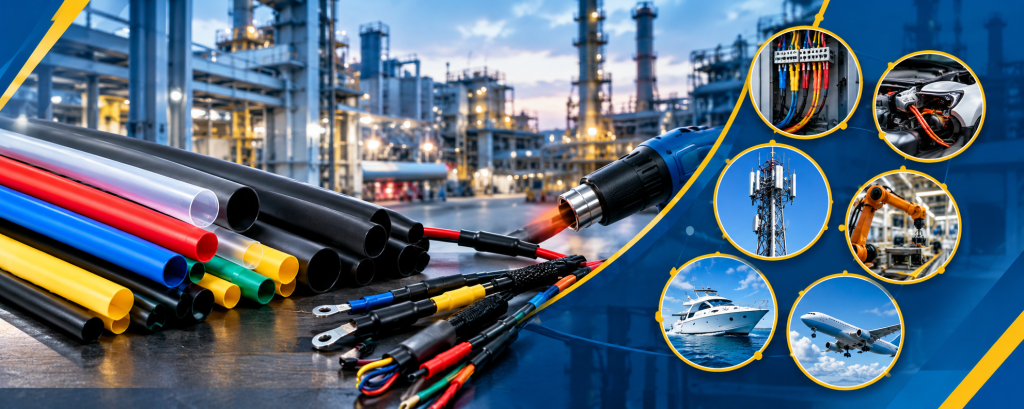
Faulty cables, uncovered conductors, or an inadequately insulated electrical joint may cause significant issues in any electrical installation. Choosing the right heat-resistant materials can help to prevent electrical risks. One superb option is heat shrink tubing. This component forms a tight-fitting cover for wires, cables, and various electrical devices. However, these tubes have different forms, gauges, and electrical characteristics and can be used for different applications.
Heat Shrink Tubes Based on Wall Thickness
- Thin Wall Tubing
It offers lightweight insulation and protection of electrical wires and small electrical elements. Polyolefin type tubing is popular for its use for the purposes of safety and identification of wires.
- Medium Wall Tubing
Medium wall tubing is another type of tube that combines the properties of insulation and protection. Some tubes of this kind come with a special adhesive coating that melts when heated.
- Heavy Wall Tubing
Heavy wall tubing is characterized by a much thicker wall and is used for various applications involving insulation and protection against mechanical impact. The hoses of this type of tube can be found in the electric supply systems protecting the wires and connections.
Based on Construction
Dual Wall Tubing
Dual wall tubing is often made of two parts: an outer insulating covering and a separate inner glue substance. When the tubing gets hot, it shrinks down while the adhesive fills the spaces around the item that it is protecting.
- Triple Layer Tubing
The triple layer tubing has a 3-part design made for specific uses with cable accessory applications. Depending on the specifics of the design, the three layers can be helpful for insulation purposes amongst similar cable accessories.
For Special Electrical Applications
- Anti-Tracking Heat Shrink Tubing
Anti-tracking tubing is made to retard electrical tracking when conducting paths develop across an insulating surface. Specialised materials maintain insulation performance even in some anticipated harsh electrical and environmental conditions.
- Stress-Control Heat Shrink Tubing
Stress-control tubing manages the electrical field around existing cable insulation interfaces. This is especially true for medium-voltage cable terminations because shape changes can create concentrated stress within the cable itself.
- Heat-Shrinkable Cable Repair Sleeves
Cable repair sleeves restore the original level of protection for damaged cable outer sheaths. Depending on how they are manufactured, they could include adhesives or reinforcing features to improve sealing and mechanical resistance.
Applications of Heat Shrink Tubes
| Type | Applications |
|---|---|
| Thin Wall Tubing | Electrical wiring, control panels, automotive wiring harnesses, wire identification, and general-purpose wire insulation. |
| Medium Wall Tubing | Power cable protection, cable accessory assemblies, outdoor electrical installations, and cable insulation systems. |
| Heavy Wall Tubing | Underground cable installations, electrical distribution networks, and applications requiring robust mechanical protection. |
| Dual Wall Tubing | Cable sealing, wire connections, outdoor electrical installations, and protection against moisture ingress. |
| Triple Layer Tubing | Medium-voltage power cable joints and terminations. |
| Anti-Tracking Tubing | Busbar insulation, switchgear, electrical panels, and power distribution equipment. |
| Stress Control Tubing | Electrical stress management at medium-voltage cable terminations. |
| Cable Repair Sleeves | Repair of damaged cable sheaths and restoration of outer protection. |
Conclusion
In each electrical installation, there are different requirements when it comes to insulation and protection. Therefore, selecting an appropriate type of heat shrink tubing helps achieve the required level of insulation for the electrical cables, ensuring a secure electrical connection. There are different heat shrink tube types offered by Yamuna Densons for robust insulation and mechanical strength of cables.